A bulge or swelling in the inguinal area
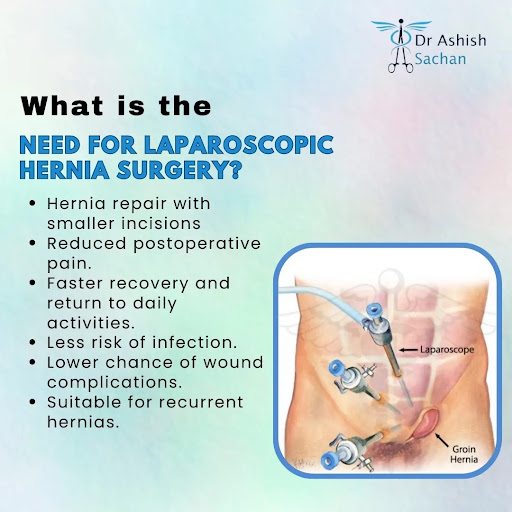
Pain or discomfort in the inguinal area, especially when lifting, coughing, or straining A heavy or dragging sensation in the inguinal area Inguinal hernias can be diagnosed with a physical examination and imaging tests such as an ultrasound or CT scan. Treatment for an inguinal hernia typically involves surgery to repair the weakness in the abdominal wall and prevent the hernia from recurring. The surgery may be performed through open surgery or laparoscopically, depending on the size and location of the hernia and the patient's overall health.
If you suspect that you may have an inguinal hernia, it is important to see a doctor for an evaluation. A hernia can sometimes be serious if it becomes trapped or strangulated, meaning that the blood supply to the herniated tissue is cut off. This can lead to serious complications such as gangrene, which can be life-threatening. For advice, contact Dr Ashish Sachan, MCh GI surgery - Senior Consultant at Fortis hospital, Greater Noida